

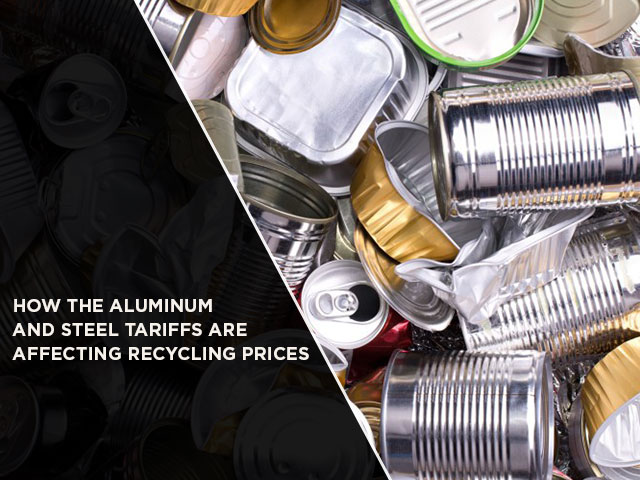
On March 8, President Trump enacted steel and aluminum tariffs worldwide that went into effect on June 1, 2018. Most significantly, the tariffs hit China, Canada, Mexico, and the EU. As most countries retaliated with equal tariffs, it put American businesses and consumers in a bind which may have significant financial repercussions on companies that rely on aluminum and steel.
Steel And Aluminum Tariffs
A 1962 law allowed presidents to impose new tariffs on products that affect national defense. Since many weapons are made with foreign aluminum and steel, the tariffs were intended to make sure that there is sufficient product available when the military needs it. In anticipation, local businesses were scrambling for steel or aluminum parts before the tariffs took effect.
The United States government identified HTS codes 7601, 7604, 7605, 7606, 7607, 7608, 7609, and 7616 which adds a 10% tariff duty fee to unwrought aluminum, bars, wire, sheets, strips, flat-rolled foil, plates, tubes, fittings, piping, and castings. The steel HTS code includes chapter 72 and 73 as well as steel mill products with a 9903.80.01. The steel duty is set at 25% which has raised concerns that downstream businesses may suffer if the tariffs are long-term.
How Do The Tariffs Affect The Recycling Industry?
Because of the tariffs, recycling practices are now more important than ever before as the market reacts and fluctuates every time a government decision is made regarding tariffs in the United States or in China. With uncertainty comes costs which will impact a wide range of industries including technologies and industrials. It will also transfer the $234 billion in goods directly to consumers who could have a lasting influence on worldwide economic and financial markets.
While the Aluminum Association and the American Iron and Steel Institute were supportive of the tariffs, The Institute of Scrap Recycling (ISRI) and the Solid Waste Association of North America (SWANA) took an optimistic approach but also understood that the tariffs would be problematic to industries that rely on precious metals. It would also affect consumers who are risky since they tend to hold off on repairs or new purchases that come with high price tags.
What Are The Market Concerns?
Most critically, consumers of aluminum and steel worry about product availability due to import restrictions or high costs that may hinder their ability to compete in their industries. There are also additional worries that the scope of the tariffs may widen as the United States and China go back and forth on tariffs. To date, the U.S. has gained about 5% in the market while China took an economic downturn of 25%. There are also concerns over job losses as some companies like Harley Davidson prepare to move their European production overseas to avoid EU import duties.
There is a strong demand for aluminum and steel which makes people who recycle critical to local businesses. What is happening is that some recycling companies have been unable to keep up with the influx of materials, so it is causing a minor downturn in prices. Call ABH Services at 781-941-2422 to learn about our competitive rates for the Greater Boston and North Shore areas.