

The aftermath of a fire is more than just scorched surfaces and smoke odor. One of the most critical yet overlooked steps in fire damage restoration is proper debris disposal. Removing damaged materials safely and thoroughly isn’t just about cleaning up—it’s about protecting health, preventing further damage, and restoring a space the right way.
When fire strikes, it alters everything it touches. Furniture, flooring, insulation, and personal belongings may appear intact but often suffer from unseen structural or chemical damage. Smoke and soot residues seep deep into porous materials, making them difficult—or impossible—to salvage. Attempting to clean or keep them may actually worsen air quality and prolong the restoration process.
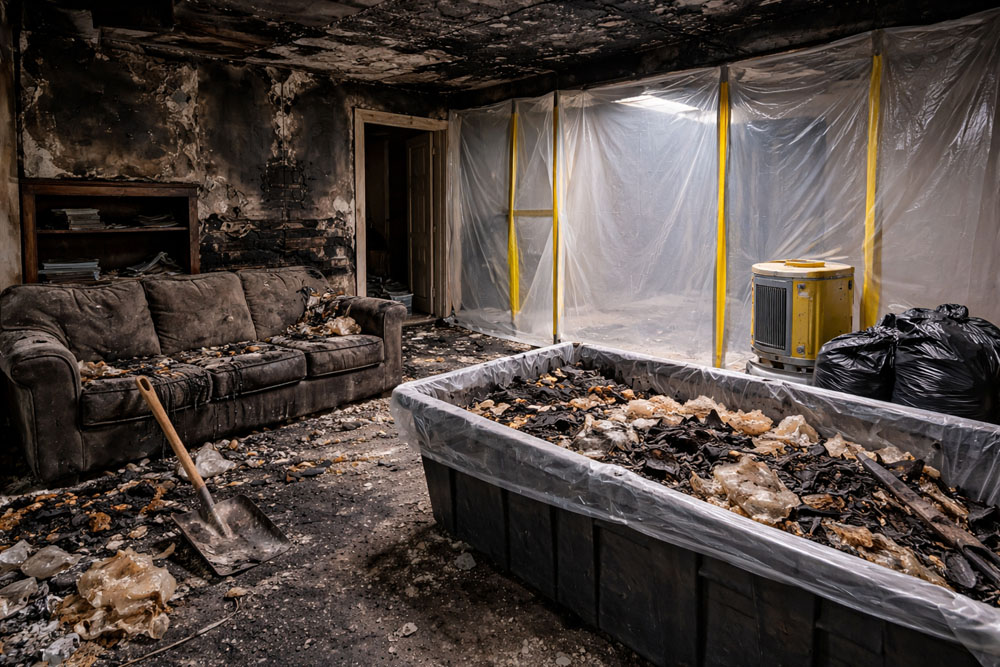
That’s why fire restoration must begin with a complete removal of unsalvageable items. Burnt materials release toxins, even after the fire is out. Soot, ash, and smoke-damaged debris can contain harmful chemicals such as formaldehyde, benzene, and other volatile organic compounds (VOCs). These particles cling to walls, ceilings, and contents, continuing to affect indoor air quality unless professionally removed.
We start by assessing the site, identifying materials that must be discarded. This often includes charred wood, insulation, carpeting, drywall, ceiling tiles, and any personal belongings that absorbed excessive smoke. Our crews wear protective gear and use specialized containment and filtration methods during the removal to prevent the spread of soot and airborne contaminants.
Disposal isn’t as simple as tossing debris into a dumpster. Certain fire-damaged items may be considered hazardous waste or require special handling based on local regulations. We ensure every item is disposed of legally and responsibly, helping property owners avoid fines or future liability.
Speed is critical in this process. The longer damaged materials remain in place, the more opportunity there is for mold growth, corrosion, or cross-contamination. Fast, professional removal minimizes structural exposure and allows the rebuilding phase to begin sooner.
We also take extra care to document every step for insurance purposes. Most property owners need clear records of what was removed, why it was deemed unsalvageable, and how the disposal was handled. Our team provides detailed logs, photographs, and itemized reports to support your claims and ensure full transparency.
Proper disposal also paves the way for effective cleaning. Once the debris is out, we can deep-clean and deodorize the remaining structure using thermal fogging, ozone treatments, or HEPA filtration. Without that first layer of damaged material removed, even the best restoration methods will fall short.
Handling a fire is never easy. But working with a team that understands not just how to clean, but how to dispose of damage correctly, makes the recovery smoother and safer.
For more information on fire damage and hazardous debris, visit EPA’s Fire Debris Removal Guidelines or Ready.gov Fire Cleanup Resources.
Contact ABH Services Inc at (781) 941-2422 or visit our Facebook page to schedule safe and compliant fire debris removal as part of your restoration process.
#FireCleanup #DebrisRemoval #SafeDisposal