

Water damage is never just about the water. Once moisture works its way into the structure of a New England home — whether from a burst pipe, a storm surge, or a flooded basement — the real threat begins within hours, not days. Mold growth after water damage is one of the most serious secondary consequences homeowners face, and in the damp, cold conditions of a New England fall and winter, that risk moves faster than most people realize.
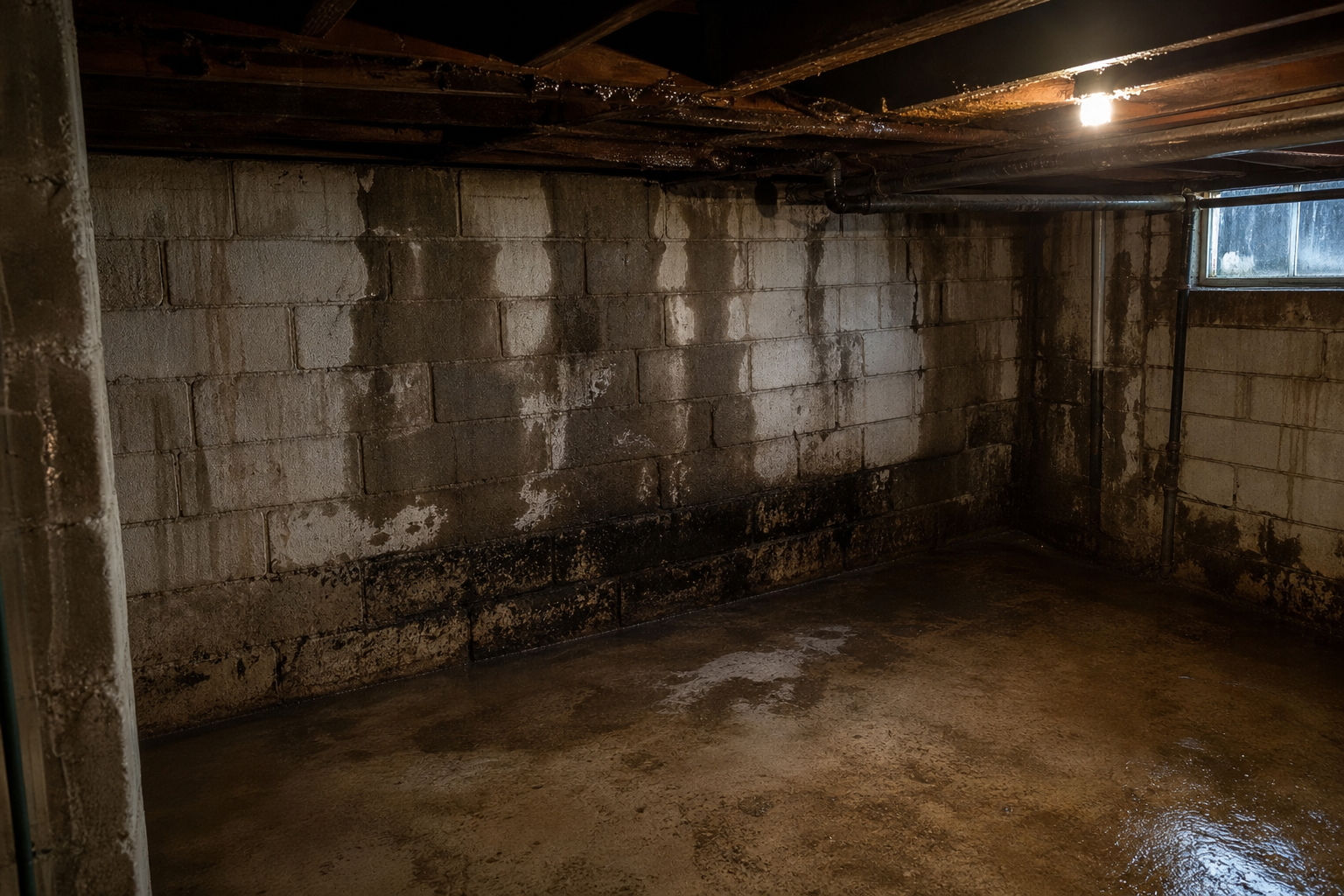
Mold spores are naturally present in the air of virtually every home. Under dry conditions, they remain dormant and harmless. But introduce excess moisture — particularly in areas with limited airflow like basements, crawl spaces, wall cavities, and subfloor framing — and those spores can begin colonizing surfaces in as little as 24 to 48 hours. By the time visible patches appear, the infestation has often already spread behind walls and beneath flooring where it cannot be seen.
New England’s climate compounds the problem significantly. Fall and early winter bring fluctuating temperatures that cause condensation to form on cold surfaces, adding ambient moisture to whatever water damage already exists. Older homes throughout Eastern Massachusetts and Southern New Hampshire — many built with wood-framed construction, plaster walls, and minimal vapor barriers — absorb and retain moisture far more readily than modern builds. That means mold doesn’t just grow on surfaces; it penetrates into structural materials and becomes increasingly difficult to remediate the longer it goes untreated. As we explain in our guide on the first 24 hours after a basement flood in Eastern Massachusetts, acting quickly is the single most important factor in limiting long-term damage.
Professional restoration matters because mold removal requires more than surface cleaning. We use industrial-grade moisture meters and thermal imaging to locate hidden saturation behind walls and under floors — the areas where mold growth after water damage is most likely to begin without any visible warning sign. Once we identify affected zones, we deploy commercial drying equipment, dehumidifiers, and controlled airflow systems that reduce moisture levels to safe thresholds far more effectively than household fans or space heaters ever could.
Beyond drying, our team applies EPA-registered antimicrobial treatments to vulnerable surfaces and ensures that any materials too far compromised — drywall, insulation, damaged framing — are safely removed and disposed of before they become a persistent source of contamination. This is not a job that benefits from a wait-and-see approach. Every hour of delay increases the scope of remediation required and the potential impact on indoor air quality and structural integrity.
Homeowners sometimes underestimate how quickly a manageable water damage situation becomes a serious mold problem. We have seen it happen in well-maintained homes across the region, and we know that professional intervention at the right moment makes all the difference between a contained cleanup and a costly reconstruction.
If your home has experienced any form of water intrusion this season, do not wait for visible mold to appear before calling for help. Reach out to us at ABH Services Inc. today — call (781) 941-2422 or visit us on Facebook at https://www.facebook.com/abhservices/ to learn more about our water damage restoration services and how we protect New England homes from the ground up.